The Complete Guide to Cooking Rice Perfectly
The complete guide to cooking rice perfectly: the 1 to 1.5 ratio, the absorption method, the ten-minute rest, and every fix for mushy or crunchy rice.
Rice should be easy — it is grain and water — yet it produces more kitchen disappointment than almost anything else: mushy one day, chalky the next, welded to the pan on weekends. The good news is that fluffy, separate-grained rice is not talent. It is a ratio, a lid left alone, and ten minutes of rest. Learn those three and rice stops being a gamble permanently.
Jump to section
Start with the grain
Long-grain rices — basmati and standard long grain — cook up separate and fluffy, and are what most of this guide assumes. Basmati brings fragrance and the longest, most elegant grains; it rewards a rinse and a short soak. Short-grain and pudding rices are bred to be sticky and creamy, which is a feature in risotto and rice pudding and a disaster if you wanted pilaf. Brown long-grain rice keeps its bran layer, so it needs more water and roughly twice the time; treat it as its own recipe, below.
To rinse or not to rinse
Rinsing removes the loose surface starch that glues grains together. For basmati and long grain, rinse in a sieve under cold water until the water runs mostly clear — thirty seconds, not a ritual. Soaking basmati for twenty to thirty minutes additionally helps the grains cook evenly and stretch long rather than snapping. Skip rinsing for risotto rice and pudding rice, where the starch is the point.
The absorption method, step by step
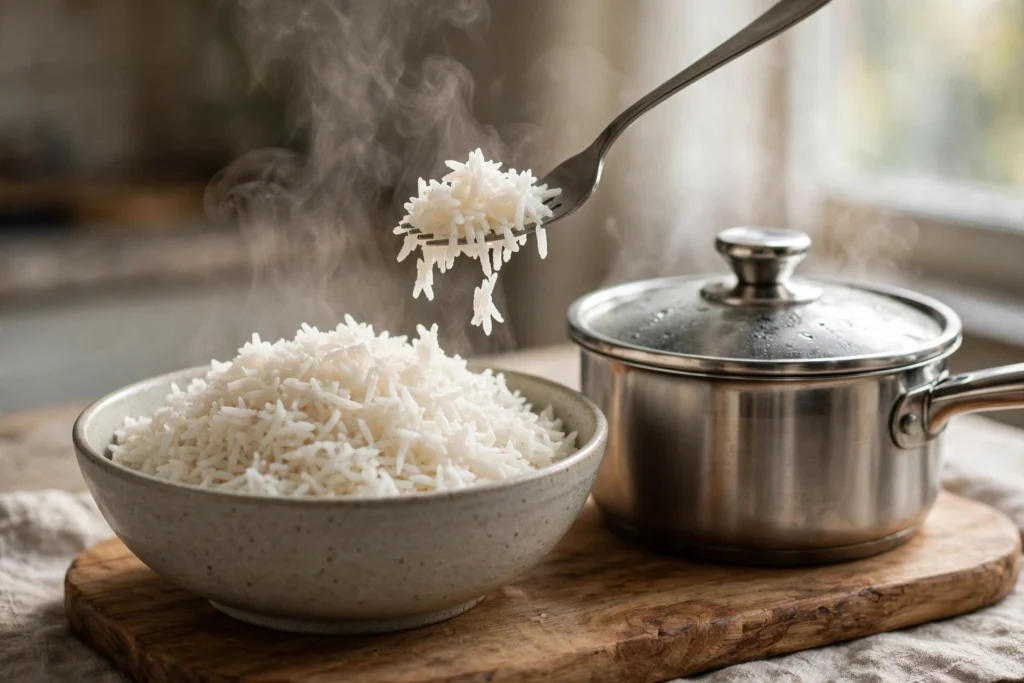
This is the core technique. Measure the rice in a mug or jug and note the volume — water is measured against it. For basmati and long grain, use one part rice to one and a half parts water (for example 300 ml rice to 450 ml water for four servings, roughly 300 g of rice). Put rice and cold water in a pan with a tight-fitting lid and a pinch of salt. Bring to the boil, stir once, then clamp the lid on and turn the heat to its lowest setting. Cook basmati for ten minutes, long grain for twelve. Then — the step that makes the difference — take the pan off the heat and leave it, lid still on, for ten full minutes. The rice finishes in its own steam and the grains firm up. Lift the lid and fluff with a fork, never a spoon, which crushes.
Adjusting for other rices
Brown long grain: one part rice to two parts water, simmered gently for 30 minutes, then rested for 10. Easy-cook (parboiled) long grain is forgiving and takes the same ratio as standard long grain. If you prefer the boil-and-drain method — rice boiled in plenty of water like pasta and drained when tender — it works reliably for basmati and is a good rescue method while you build confidence; the grains will be slightly less fragrant, the texture dependable.
Troubleshooting
Mushy rice means too much water or too much stirring; next time knock the water back by two tablespoons and stir once, at the start, only. Crunchy rice means the water boiled away too fast — check the lid actually seals, and keep the heat genuinely low. A burnt base with perfect rice above it means the heat was too high at the end; a heavy-based pan helps, and the burnt layer should be left in the pan, not scraped into the serving bowl. Rice that clumps as it cools was under-rested — the standing time is when loose surface moisture redistributes.
Taking it further: a simple pilaf
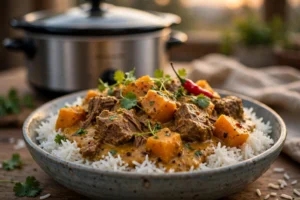
Once the plain method is reliable, pilaf is a ten-second upgrade: fry a finely chopped onion in butter or oil, stir the rinsed rice through until the grains turn translucent at the edges, then add the measured water — or stock — with a bay leaf or a few cardamom pods, and cook exactly as above. It is the natural partner for curries like our Slow Cooker Beef and Butternut Curry and takes no longer than the plain version.
Leftover rice, handled safely
Rice is the one leftover to treat with respect. Cool cooked rice quickly — within an hour — refrigerate it, and use it within a day. Reheat until piping hot all the way through, and only reheat it once. Fried rice made from fridge-cold, day-old rice is genuinely better than from fresh: the grains dry slightly and fry instead of steaming, which is why takeaways taste the way they do.
Frequently asked questions
How much rice per person?
About 75 g uncooked rice per adult for a main-course serving — roughly a small mug for two people. Rice roughly triples in weight as it cooks.
Does the lid really have to stay on?
Yes. Every peek releases the steam the top layer of rice needs to cook. Set a timer and trust it.
 Next up How to Sharpen a Kitchen Knife on a Whetstone
The Recipe Nook is an independent recipe publication. Times and yields are stated plainly, as written — see our Editorial Policy.