Classic Victoria Sponge with Jam and Cream
Classic Victoria sponge with jam and cream: equal-weight golden layers, raspberry jam and whipped cream — the teatime cake, with the crumb done right.

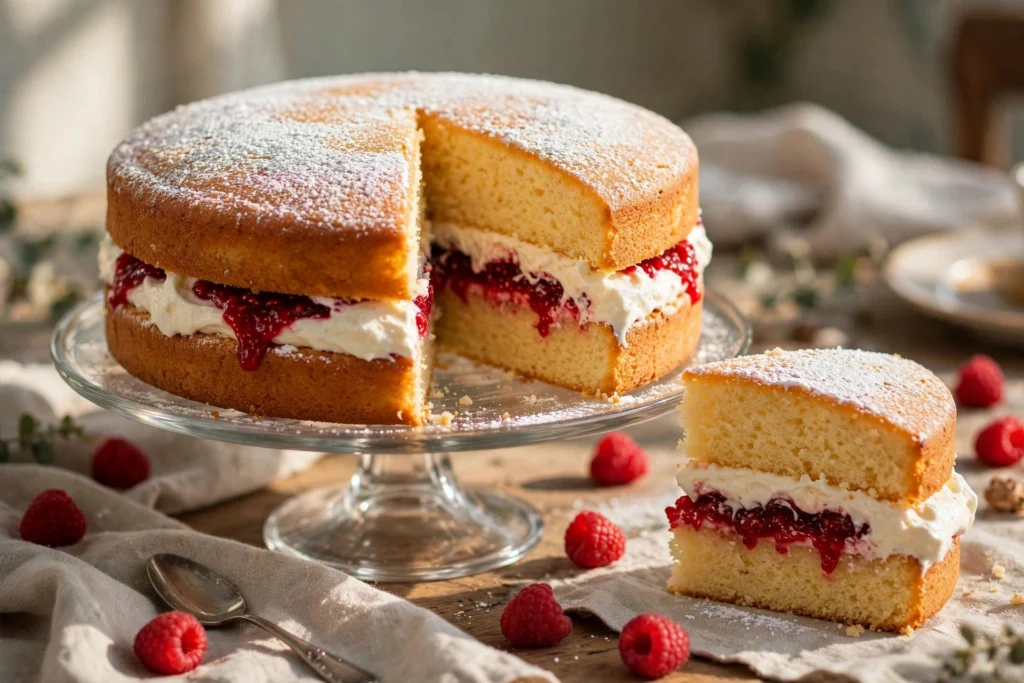
The Victoria sponge is the cake by which all other teatime cakes are judged: two golden layers of vanilla sponge, raspberry jam, softly whipped cream and a snowfall of icing sugar. No fondant, no fuss — its whole reputation rests on the crumb, so the crumb has to be right.
Jump to section
This recipe uses the classic weighed method — butter, sugar, eggs and flour in equal weights — with two modern insurance policies: room-temperature everything, and a spoonful of milk to keep the sponge tender rather than bready.
Why this recipe works
Equal weights is not nostalgia, it is structure. The sponge’s rise comes mostly from air beaten into the butter and sugar and from the baking powder in the self-raising flour; keep the proportions balanced and the layers bake level, fine-crumbed and sturdy enough to hold a filling without squashing. Creaming the butter and sugar until genuinely pale — three full minutes, not thirty seconds — is where most of that air comes from.
Adding the eggs gradually, with a spoonful of flour if the mixture threatens to curdle, keeps the emulsion stable. A curdled batter still bakes, but the crumb is coarser and the rise lower; five unhurried minutes at the start buys you the texture.
The key ingredients
Butter, not baking spread, because the flavour of this cake is mostly butter. Eggs at room temperature whip in instead of clumping. For the filling, raspberry jam is the traditionalist’s choice and its sharpness earns its place against the sweet sponge; strawberry is softer and sweeter. If you are building a small repertoire of British bakes, our Lemon Drizzle Loaf Cake is the natural next cake after this one.
Tips for level layers
Weigh the batter between the two tins — it takes ten seconds and both layers finish together. Spin each tin once on the counter to settle the batter out to the edges. Do not open the oven before twenty minutes; the centre sets last and a rush of cold air can sink it. Cool the sponges completely before filling, or the cream slides and melts into the crumb.
Storage
Filled with fresh cream, the cake lives in the fridge and is best within two days — bring slices back to room temperature for twenty minutes before serving. Unfilled sponges keep for three days wrapped, or freeze for three months and fill after defrosting. Slices also freeze individually, wrapped, which turns one Sunday cake into a month of emergency puddings.
Frequently asked questions
Can I use buttercream instead of whipped cream?
Yes, and it keeps a day longer. Beat 75 g soft butter with 150 g icing sugar and a splash of milk; spread over the jam.
Why did my sponge sink?
Usually the oven door opened too early, or the flour was folded in so hard the air was knocked out. Fold gently with a large metal spoon.
Classic Victoria Sponge with Jam and Cream
Ingredients
- 225 g unsalted butter, softened, plus extra for the tins
- 225 g caster sugar
- 4 large eggs, at room temperature
- 225 g self-raising flour
- 1 tsp baking powder
- 1 tsp vanilla extract
- 2 tbsp whole milk
- 4 tbsp raspberry jam
- 150 ml double cream, softly whipped
- Icing sugar, for dusting
Instructions
- Heat the oven to 180°C (160°C fan, gas mark 4). Grease and line two 20 cm round tins.
- Beat the butter and sugar together for about 3 minutes until very pale and fluffy.
- Beat in the eggs one at a time with the vanilla, adding a spoonful of flour if the mix starts to curdle.
- Fold in the flour and baking powder gently, then the milk, until just combined. Divide evenly between the tins and level the tops.
- Bake for 25 minutes until risen, golden and springy to the touch. Cool in the tins for 10 minutes, then turn out and cool completely.
- Spread the jam, then the cream, over the top of one sponge. Sit the second sponge on top and dust generously with icing sugar.
 Next recipe Lemon Drizzle Loaf Cake
The Recipe Nook is an independent recipe publication. Times and yields are stated plainly, as written — see our Editorial Policy.