How to Freeze Bread, Cake and Leftovers Properly
How to freeze bread, cake and leftovers properly: slice bread first, protect cake, portion leftovers, cool food fast — the freezer, used like a second cook.
The freezer is the most underused cook in the kitchen. Used well, it turns a too-big loaf into a fortnight of toast, a celebration cake into next month’s puddings, and tonight’s leftover curry into a free dinner on a day when cooking is not happening. Used badly — food thrown in unwrapped, unlabelled and forgotten — it produces freezer-burned mysteries nobody ever eats.
Jump to section
The difference is three habits: get the air out, freeze in the portions you will actually use, and cool food properly before it goes in. Everything else is detail.
The golden rules
Cool cooked food quickly — within two hours — spread shallow in the fridge rather than sitting warm on the counter, and freeze it the same day. Wrap tightly: air is the enemy, because it dries surfaces into grey, leathery freezer burn. Squeeze air from bags, double-wrap bread and cake, and leave a centimetre of headroom in tubs of anything liquid, because food expands as it freezes. Write the date on everything with a marker; memory is not a labelling system. Most home freezers sit at −18°C, and at that temperature food keeps its quality for the times below — it does not become unsafe the day after, just gradually less delicious.
Bread: slice first, always
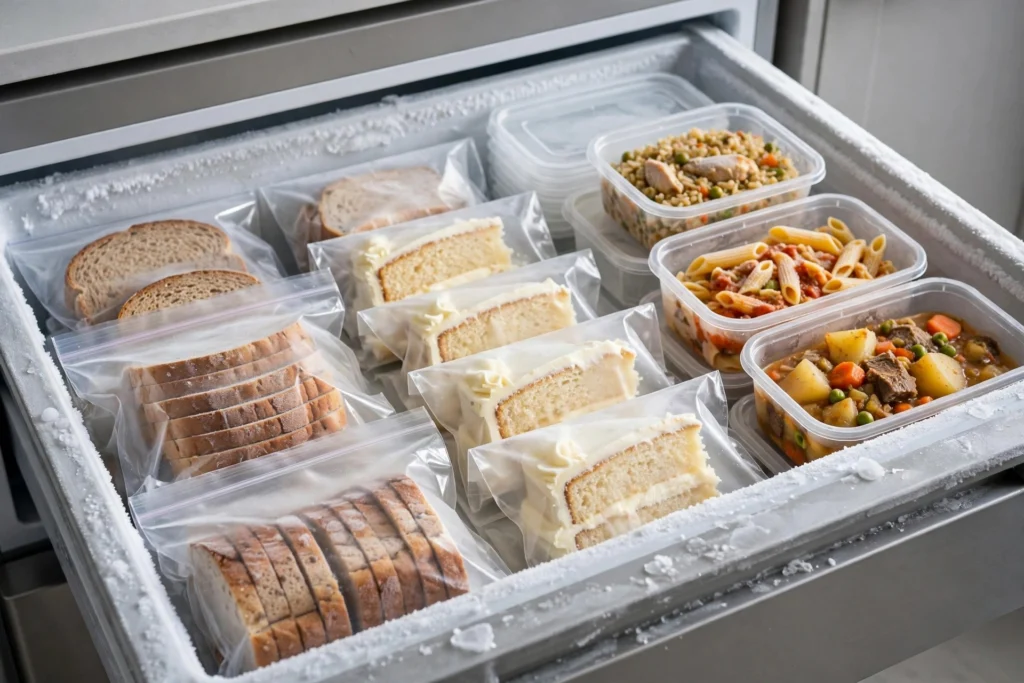
Bread freezes brilliantly for up to three months, but a whole frozen loaf commits you to defrosting a whole loaf. Slice first, freeze the loaf in its bag with the air pressed out, and you can take slices straight from frozen to toaster — toast on a slightly higher setting and nobody will ever know. Rolls and flatbreads behave the same way. Refresh a whole defrosted loaf with five minutes in a 180°C (160°C fan, gas mark 4) oven and the crust comes back to life.
Cake: protect the crumb
Plain sponges freeze for up to three months, whole or sliced — sliced is smarter, for the same reason as bread. Wrap slices individually so they can be taken out one at a time for lunchboxes. Iced cakes freeze too, but freeze them unwrapped for an hour first until the icing is hard, then wrap, so the decoration is not crushed. Cream-filled cakes are the exception: fresh cream turns grainy on thawing, so freeze those cakes unfilled and add the cream later.
Leftovers: portion like you mean it
Freeze leftovers in single or double portions in shallow tubs — shallow freezes fast and defrosts evenly. Soups, stews, curries and sauces are the freezer’s greatest hits and keep for three months; our Slow Cooker Beef and Butternut Curry is built to make extra for exactly this. Cooked rice needs care: cool it quickly (within an hour), refrigerate straight away, freeze the same day, and reheat until piping hot throughout, only once. Defrost everything else in the fridge overnight rather than on the counter, and eat within 24 hours of defrosting.
What not to freeze
Eggs in their shells, soft cheeses, mayonnaise-based sauces, salad leaves and cucumber all come back wrong. Cooked pasta on its own goes soft — freeze it in its sauce instead. And if something has been frozen, defrosted and not eaten, the bin is the right answer; refreezing raw food that has thawed is not a risk worth taking.
Frequently asked questions
How long does home-frozen food really keep?
For quality: bread and cake about three months, cooked dishes two to three months, soups three months. Use the date on the label and rotate oldest to the front.
Do I need special bags or tubs?
No — any airtight container works. The seal matters more than the brand, and squeezing air out matters more than both.
 Next up How to Store Fresh Herbs So They Last Longer
The Recipe Nook is an independent recipe publication. Times and yields are stated plainly, as written — see our Editorial Policy.